
RCMCP: Level 3 Spring
Kunlaya Wang
19S36152364326831
Level 3 Piano
June 14th, 2020 3:00 PM
LIst A: Harlequinade by Johann Ludwig Krebs (1713 - 1780) (L. 3, A)
List B: Sonatina in C Major Op. 36 No. 1 by Muzio Clementi (1752-1832) (L. 3, B)
List C: Song of the Twilight by Yoshinao Nakada (L. 3, C)
Etude: Burgmuller Op. 100 No. 2 (L. 3 Etude)
Etude: Left Alone by Joyce Grill (b. 1936) (L. 3, Etude)
Lesson Assignments:
TECHNIQUE
RCMPC Technique Level 3.
Warm up with 5 different technical items each practice session.
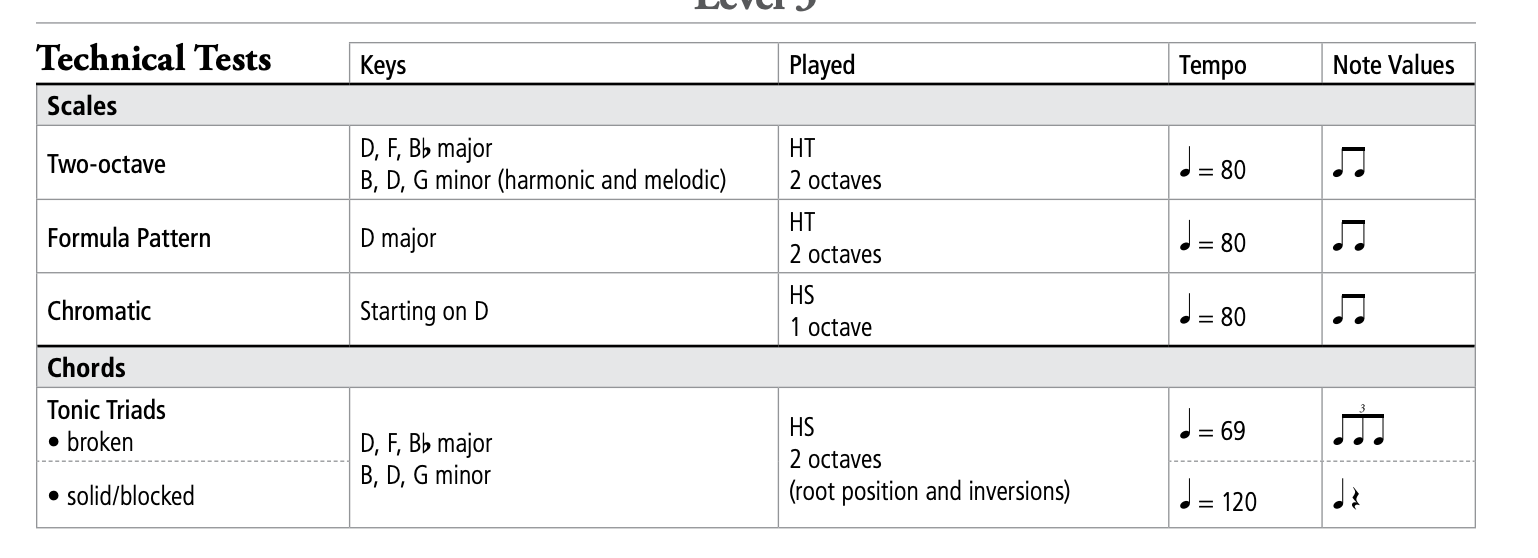
RCM Technical Requirements Level 3
THEORY
Celebrate Theory: Level 3
No assignment
Left off finishing Unit 4.
READING
Online Ear Training and Rhythm
Click “Piano Teacher Courses”
Login Info:
info@gledhillartscollective.com
dust2789
Four Star Sightreading & Ear Tests Level 4
Doesn’t have level 4
Start with Dustin after Masquerade is finished.
Sightreading 3A (DAILY ASSIGNMENT)
Continue on
REPERTOIRE
Dmitri Kabalevsky (1904-1987) Folk Dance Op. 39 No. 7 (L. 4,
mm. 9-12 practice this section thinking about the D Major Scale! Crescendo!
mm. 12-14 - practice this as one group
mm. 15-16 - practice this as one group
Learn the rest of the piece hands together.
Lina Niamath (1939-), Masquerade (L. 4, Etude)
mm. 25-27 - pedal and slow down in m. 27. Keep the triads pp.
m. 31 - don’t play staccato. Keep wrist up and smooth and try not to twist your wrist when you play your thumb.
First page: triads and accompaniment chords softer. RH arpeggios smooth and non-staccato.
Practice Tools
Close Loud
With each note, keep your fingers close to the keyboard and pop your wrist up to help release the tension created when you hit the key with force!
Rhythms (Long, short, short, Long, short, short. etc.)
The long notes are strong like “close loud,” and the short notes are light and played as quickly as possible, THINKING about going to the next long note.
Accent Practice
Accent one note in a group and practice alternating the note that receives the accent.
Staccato Practice
Double Note Practice
Slo-Mo Practice
Review once a week with your music.
BAROQUE
CLASSICAL
Muzio Clementi (1752-1832)
Sonatina in C Major Op. 36 No. 1: Allegro (L. 3, B)
Johann Ludwig Krebs (1713 - 1780)
Harlequinade (L. 3, A)
ROMANTIC
Johann Friedrich Franz Burgmuller (1806-1874)
L’Arabesque Op. 100 No. 2 (L. 3 Etude)
20TH AND 21ST CENTURY
Joyce Grill (b. 1936)
Left Alone (L. 3, Etude)
Yoshinao Nakada (L. 3, C)
Song of the Twilight (L. 3, C)
Minuet in E-flat Major by Johann Mattheson (1681 - 1764) (L. 3, A)
Prokofiev Op. 65 No. 10
Toccatina by Kabalevsky
Burgmuller Op. 100 No. “The Limped Stream”
Andante in G Minor by Telemann (L. 1)
*Haydn German Dance in D Major (L. 1)
*Hopscotch by Boris Berlin (L. 1 Etude)
*Celebration by Anne Crosby Gaudet (L. 1 Etude)
*A Swinging Leprechaun by Mike Schoenmehl (L. 1 Etude)
Etude in C Major by Félix Le Couppey (L. 1 Etude)
Far Away by Teresa Richert (L. 1 Etude)
*Distant Chimes by Jon George
Gavotte in C by Telemann
*Pantomime by Faber
Curious Cat by Teresa Richert (Prep A)
Baby Kangaroo (12/7/17)
Teeter-Totter by Dale Reubart (Prep A)
Dmitri Kabalevsky: Marching Op. 39 No. 3 (Prep A)
*Let's Waltz by Elvina Pearce (Prep A)